


We are preserving this for the future of humanity.
Guardian of the 2nd green lung of the planet — more than 60 protected areas in the heart of Africa — more than 30% of the national territory conserved and 5 sites listed as UNESCO World Heritage sites.
The Okapi : Unique Treasure of the DRC
A symbol of our endemism, the okapi embodies the invaluable richness of our forests. Its survival depends on the strict preservation of its habitat, a vital but fragile carbon sink. Through the development of responsible ecotourism, we are transforming this biodiversity into a source of national pride. We are preserving the future.
A Vision for Conservation
Under the leadership of President Félix Tshisekedi, Supreme Conservation Officer, the General Directorate, headed by Yves Milan, is leading the modernization of the ICCN. Our mandate: to ensure the operational and scientific management of our protected areas to guarantee the resilience of our natural capital. We are conserving the future.
Mangroves: Our Climate Bulwark
As true carbon sinks, the mangroves of the Congolese coast form a strategic shield against erosion and climate change. The ICCN is protecting these critical ecosystems to stabilize our global carbon footprint while promoting coastal ecotourism. We are preserving the future.
Bonobo Credit : Financial Innovation
Launched in June 2025, the "Bonobo Credit" marks the DRC's leadership in global green finance. By valuing ecosystem services, we are transforming the protection of iconic species into direct resources for development and conservation. We are conserving the future.
Humanity at the Heartof Nature
Beyond monitoring, the ICCN invests in local development. By supporting sustainable agriculture and environmental education for younger generations, we are transforming our ecosystems into sources of prosperity for riverside communities. We are preserving the future.
Green Corridor : The Future of the Territory
With the appointment of Mr. Pacifique Kahasha as Special Advisor, the Green Corridor becomes the cornerstone of land-use planning. This strategic corridor between Kivu and Kinshasa protects our primary forests while structuring sustainable development for local communities. We are preserving the future.


100+
Years of Expertise in Conservation
2000+
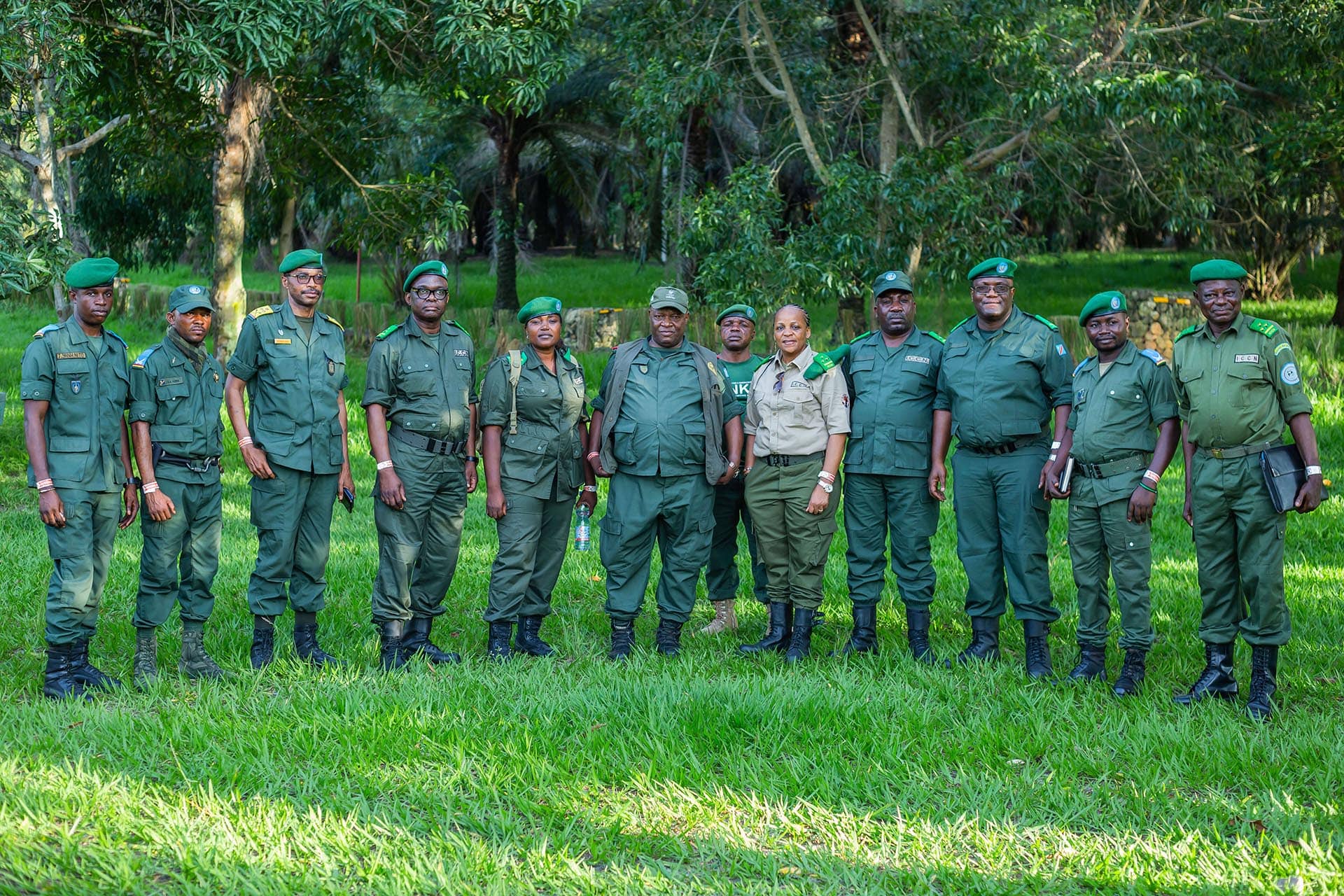
Eco-guards deployed
3
sanctuaries
8
National Parks, including 5 UNESCO World Heritage Sites
8
Zoological and Botanical Gardens
> 30 %
Of the Protected National Territory
50+
International Partners
60+
Protected Areas
Did you know ?
The DRC : A Country of Solutions
1st in Carbon
Thanks to the tropical forest mass—plus its peatlands—the Congo Basin constitutes the world's largest carbon sink (the Congo Basin forest sequesters approximately 1.7 tonnes of carbon per hectare, followed by the forests of the Amazon Basin at 1.2 tonnes of carbon per hectare).
2nd in Oxygen
The DRC is home to the largest part of the Congo Basin, the second-largest tropical forest massif after the Amazon.
5 RAMSAR Sites
Wetlands of international importance protected in the Democratic Republic of the Congo.
-90 %
Decline rate of certain forest elephant populations over 30 years due to international poaching.
500,000 hectares per year
Forests lost every year in the DRC — the world's second-highest deforestation rate.
Global Threat
If the Congo Basin collapses, the climatic balance of the entire planet tips over.
ICCN Vision and Mission
We preserve for the future of humanity.
The ICCN’s vision is to ensure the effective and coordinated management of a network of protected areas for the sustainable conservation of the Democratic Republic of the Congo’s unique diversity of biological species and ecosystems.
Thus, in accordance with Decree No. 10/15 of April 10, 2010, the ICCN’s objective is nature conservation within protected areas, both in situ and ex situ. In this capacity, it is responsible, in particular, for :
- ensure the protection of flora and fauna ;
- To enhance the value of biodiversity by fostering scientific research and facilitating ecotourism activities, in accordance with applicable legislation and in compliance with fundamental conservation principles ;
- To conduct, or commission the conduct of, studies, and to ensure their dissemination for scientific and educational purposes in the field of conservation.
Over
100 years
of conservation
Natural Heritage
Discover Our Protected Areas
The DRC is home to some of the most remarkable ecosystems on the planet, protected by a network of protected areas.
Virunga National Park
Africa’s first national park, a UNESCO World Heritage Site
Upemba National Park
Savannas and gallery forests in the northeast of the country
Kahuzi-Biega National Park
Habitat of Grauer’s gorillas, the largest primates
Biodiversity
Flagship species
Icons of Congolese conservation.
Okapi
Animal emblematic of the DRC
Mountain Gorilla
Our forest cousins
Forest elephant
Architect of ecosystems
Latest news
News
March 25, 2026
The year 2026 begins under the best auspices for conservation in the Democratic Republic of the Congo.
February 10, 2026
The General Directorate is proud to announce the issuance of the first official ICCN Service Cards!
March 13, 2026
Kinshasa, March 13, 2024 – Continuing his intense diplomatic agenda, the Director General of the Congolese Institute for Nature Conservation (ICCN), Yves Milan Ngangay, granted an official audience to His Excellency Mr. Roberto Parente, Ambassador of Brazil to the Democratic Republic of the Congo.
Support conservation
Your donation directly contributes to the protection of Congolese biodiversity and to supporting eco-guards in the field.